Dog toys are not just for fun, although fun is a big part of it. The right toys keep a dog busy, help clean its teeth, slow down fast eaters, and give a bored dog something to do instead of chewing the furniture. The wrong toys can break apart, be swallowed, or simply be ignored. There are three main types most owners need: chew toys, interactive toys, and slow feeder toys. This guide explains what each type is for, and how to choose safe, suitable toys for your dog.
Why Dogs Need Toys at All
Dogs are active animals with a strong need to chew, chase, and explore. A pet dog in a house has far less to do than a dog in the wild, and without something to occupy it, that energy has to go somewhere — often into barking, digging, or chewing things it should not.
Chew Toys: For Teeth, Gums, and Calm
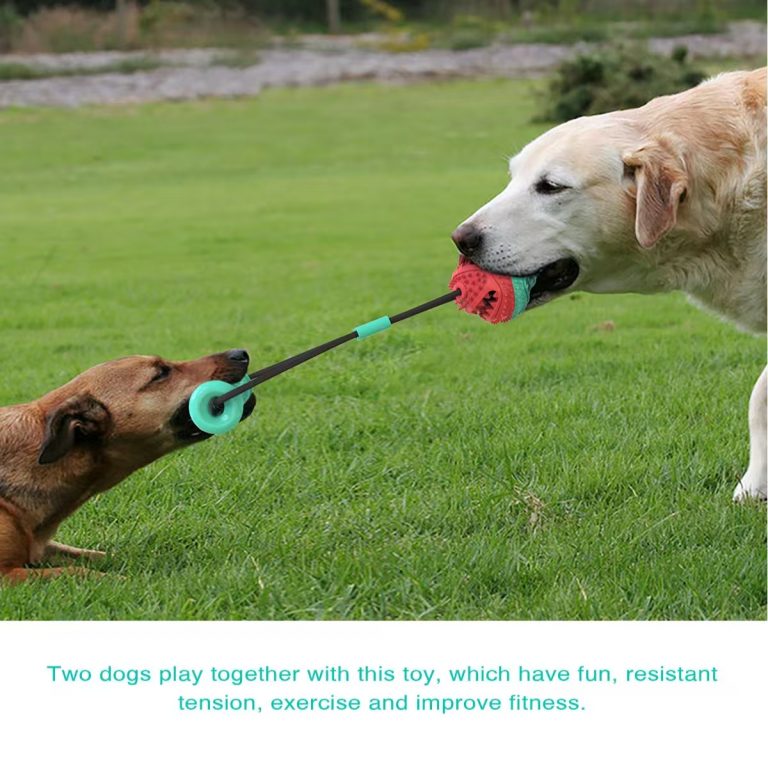
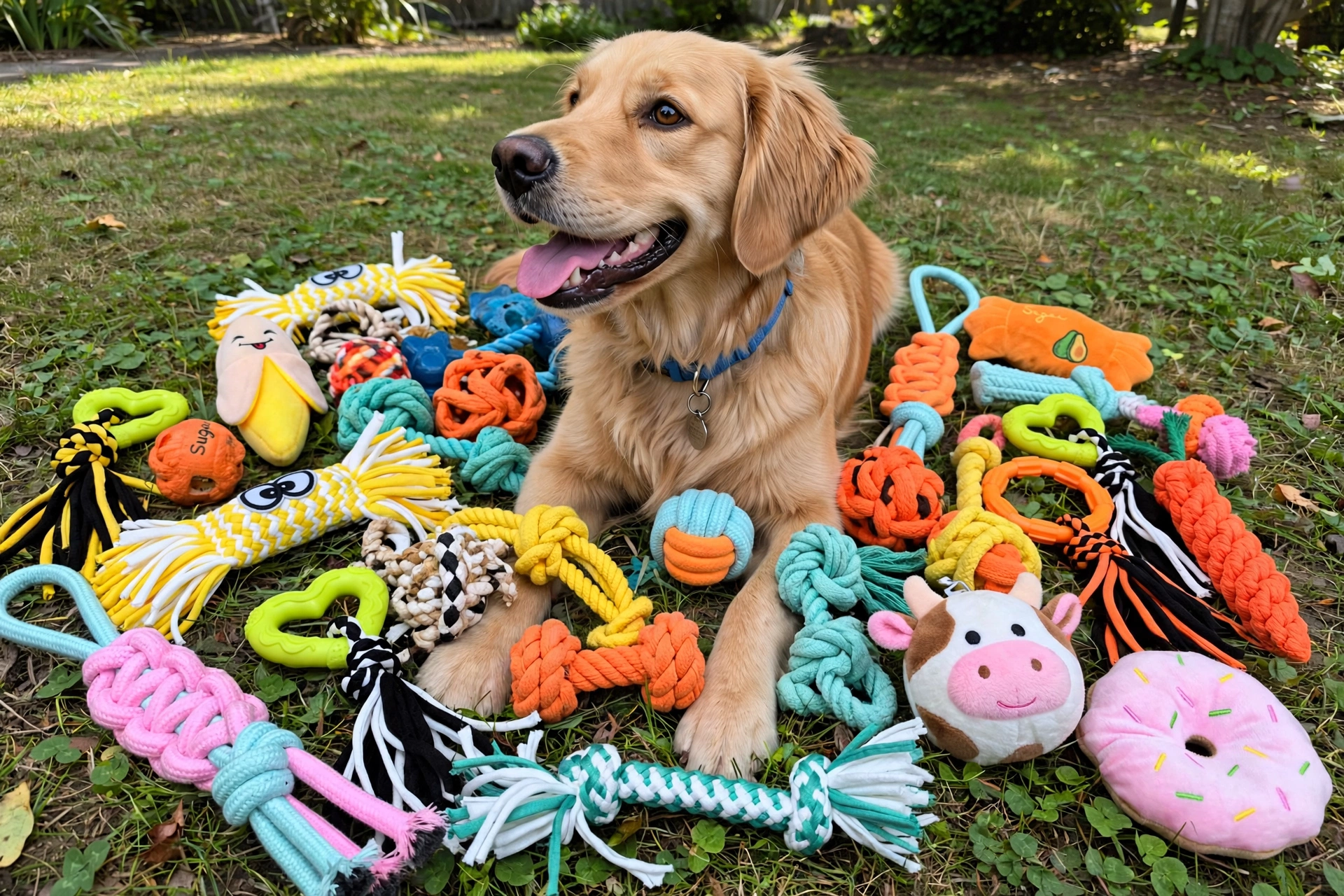
Chew toys are the simplest type of dog toy, and the most important. They are made to be bitten, gnawed, and carried around. A good chew toy should be tough enough to survive regular chewing, but not so hard that it damages the dog’s teeth. Rope toys are a popular type: twisted cotton rope gives a dog something to grip and pull, and the fibres can help clean between the teeth. Rope toys are also good for gentle tug games. Check a rope toy regularly — if it starts to unravel and the dog is swallowing long threads, replace it.
Plush toys with a squeaker inside are fun for many dogs, but not suitable for strong chewers, who can tear them open and swallow the stuffing or the squeaker. Rubber toys are usually tougher, and some can be filled with food to keep a dog busy for longer. Choose the right size first: a chew toy should be too big for the dog to fit entirely in its mouth, and too big to swallow. Then check hardness with the thumbnail test — press your thumbnail into the toy. If it gives a little, it is probably safe for the teeth. If it is rock hard, it may crack a tooth. Supervise a new toy for the first few sessions, and if the dog tears it apart quickly, try a different type.
Interactive Toys: For Play, Training, and Bonding
Interactive toys do something: they squeak, they move, they can be thrown and fetched, or they hide a treat the dog has to work to get out. A squeaky toy is the classic example — the squeak catches the dog’s attention and makes the toy more exciting to chase and carry. Plush squeaky toys suit gentle players; stronger dogs need a tougher version, checked regularly for tears.
Slow Feeder Toys: For Dogs That Eat Too Fast
Some dogs eat their food in seconds, gulping it down without chewing. That can cause stomach problems, and it can be a risk for bloat in larger dogs. Slow feeder toys are designed to slow the dog down. They usually have ridges, grooves, or compartments the dog has to work around to get the food out. Instead of eating from a flat bowl in a few seconds, the dog has to lick, nudge, and pick at the food, which can turn a 30-second meal into several minutes. That is better for digestion, and it keeps the dog busy.
Slow feeders come in different shapes: flat mats for wet food, balls for dry food and play, and maze bowls for very fast eaters.
Safety, and How Many Toys Does a Dog Need?
A few safety rules apply to every toy. Choose the right size — too big to swallow, too big to fit fully in the mouth; when in doubt, go bigger. Check the toy often for tears, loose parts, frayed rope, or cracks. A damaged toy is a dangerous toy, so replace it before the dog can swallow a piece. Supervise new toys, take a toy away when it is worn out, and keep toys clean, especially slow feeders and toys that hold food. Match the toy to the dog, too: puppies need softer toys, older dogs may need easier puzzles, and strong chewers need the toughest options.
The right toys make a real difference to a dog’s day. They keep teeth clean, minds busy, meals slower, and boredom at bay — and a dog with good toys is less likely to chew the things you do not want it to chew.
For more pet care guides, visit our shop or browse our dog products.
For retailers and pet shops: dog toys are a high-turnover line — chew toys wear out, puppies outgrow them, and customers buy toys in sets. Stocking chew toys in different sizes, plus interactive and slow feeder options, gives customers a reason to buy more than one item at a time. Browse our wholesale dog toy range in the shop.