A dog bed is not just a place to sleep. Dogs spend a large part of the day resting, and a good bed supports their joints, keeps them warm in winter, and gives them a place of their own. A poor bed flattens quickly, traps smells, and leaves an older dog stiff in the morning. Choosing the right one is not complicated once you know what to look for: size, support, washing, and warmth.
Start With Size: Measure the Dog, Not the Room
The most common mistake is buying a bed that is too small. A dog should be able to lie flat on its side, stretch its legs out, and turn around without hanging over the edge. Watch how your dog actually sleeps before you buy — curled-up sleepers need less space than dogs that sprawl.
Measure your dog from nose to tail while it is lying stretched out, then add a few inches on each side. For width, measure the dog lying on its side from paws to back. If you are between two sizes, choose the larger one. A bed that is slightly too big is far more comfortable than one that is slightly too small. Puppies grow fast, so check the size again after a few months, and give each dog in a multi-dog home its own bed.
Orthopedic Support: Who Really Needs It?
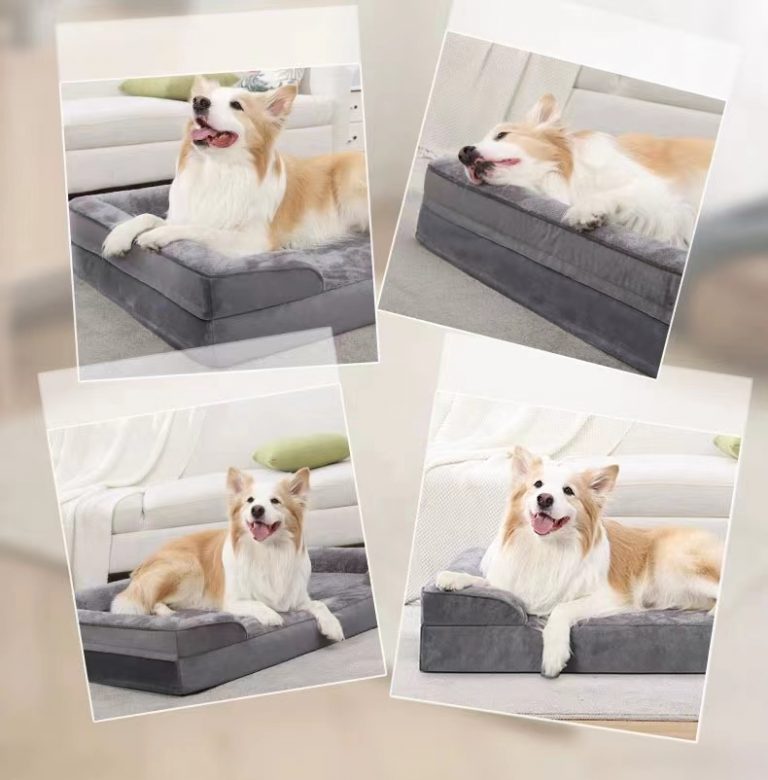
Orthopedic dog beds use a thicker, firmer filling that spreads the dog’s weight evenly instead of letting the heaviest parts sink to the floor. They are most useful for older dogs, large and heavy breeds, dogs recovering from injury, and dogs with stiff joints. If your dog takes a while to get up in the morning or always chooses the sofa over a thin bed, better support may help.
A young, light, healthy dog is usually comfortable on a well-made standard bed. Test any bed by pressing down hard in the middle with your hand or knee. If you can feel the floor through it, the filling is too thin. A good bed should compress under weight and then spring back, without bottoming out. A bed with a raised rim also gives many dogs a place to rest their head, while dogs that stretch out often prefer a flat mat-style bed.
Washable Matters More Than You Think
A dog bed gets dirty. It collects hair, dust, mud from paws, and the occasional accident. A bed that cannot be washed will start to smell within weeks, so washability should be one of your first checks, not an afterthought.
The best option is a bed with a removable, machine-washable cover. Check the washing instructions before buying: can the cover go in a normal washing machine, and can it be dried without shrinking? Water resistance is also worth considering, especially for puppies, older dogs, and dogs that come home wet from a walk. A water-resistant inner layer protects the filling from accidents and damp, so the bed lasts longer and stays fresher. Let the bed dry fully in fresh air after washing.
Winter Warmth: Keeping Dogs Comfortable in Cold Weather
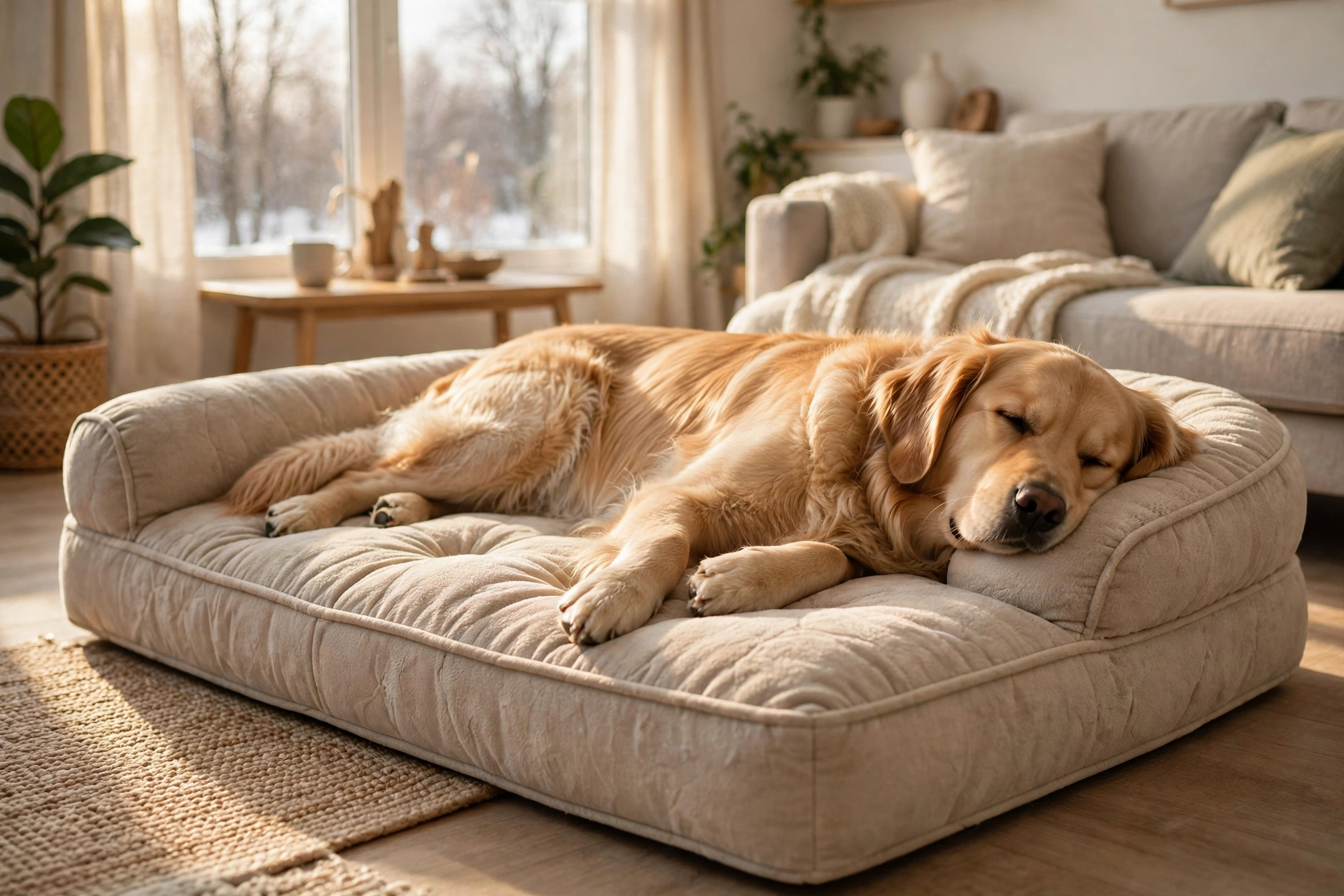
Dogs feel the cold, especially short-coated breeds, small dogs, puppies, and older dogs. In winter, a bed on a cold floor can lose heat quickly, even indoors. Raise the bed off the floor if you can — a bed on cold tile will always feel colder than the same bed on a rug or a raised frame — and move it away from draughts and exterior doors.
Look for a bed with extra insulation or a thicker base for winter. A soft, plush surface holds warmth better than a thin, flat one, and a bed with raised sides can shelter a dog from draughts. Some owners add a washable blanket on top of the bed in winter, which is easy to wash and lets the dog burrow in. Keep the bed dry, too: a damp bed in winter can chill a dog quickly, so dry your dog’s paws and coat after rain or snow.
Material, Durability, and When to Replace It
Squeeze the filling before you buy: it should feel even, with no lumps or thin patches. Check the stitching, especially at the corners and along the zip, because that is where a bed usually fails first. If your dog chews, look for a tougher outer fabric with as few loose trims, buttons, or dangling parts as possible. No bed is truly chew-proof, but a simple, sturdy design lasts longer with a determined chewer.
Even a good bed wears out. Replace it when the filling no longer springs back, when it stays flat after washing, when the cover is torn, or when it smells even after a thorough wash. A bed that has gone flat offers little support, and for an older dog that matters. Keep a spare cover, so the dog is not without a place to sleep while the cover is in the wash.
A dog bed is a small purchase compared with food or vet care, but it is something the dog uses every single day. Getting the size, support, and washing right makes a real difference to how well a dog rests — and a well-rested dog is a happier, healthier dog.
For more pet care guides, visit our shop or browse our dog products.
For retailers and pet shops: dog beds are a staple line that customers replace regularly. Stocking a range that covers orthopedic support, washable covers, and winter warmth gives your customers a reason to come back when the seasons change. Browse our wholesale dog bed range in the shop.